

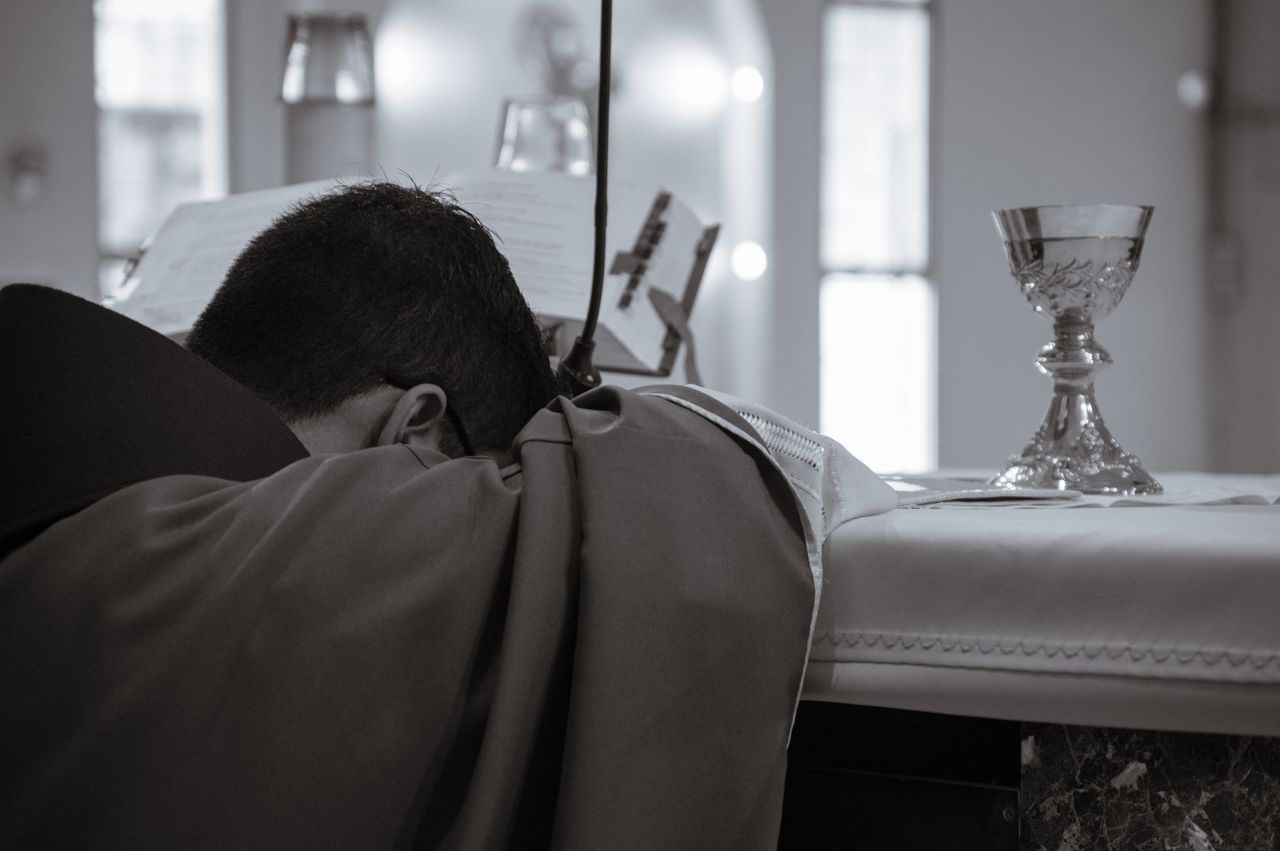
If you are a priest or pastor accused of sexual abuse, you may be facing questions about your ministry, reputation, family, legal rights, and future before you know whether criminal charges will be filed. The same concerns can arise for ministers, rabbis, imams, deacons, religious educators, and other religious leaders facing similar allegations.
You may have been called into a private meeting and told that a current or former congregant made an accusation. Police detectives may have contacted you, appeared at your home, or asked you to come to the station. In other cases, you may first learn about the allegation when you are placed on administrative leave, asked to surrender church property, removed from ministry duties, or named in a news report.
Your first instinct may be to explain what happened immediately. You may believe that cooperating without an attorney will resolve a misunderstanding. You may want to contact the person who made the allegation, reassure members of your congregation, or respond publicly to protect your name.
Those reactions are understandable, but acting before you understand the legal consequences can create additional problems. A clergy sexual abuse allegation can lead to a criminal investigation, an internal institutional inquiry, employment or ministry restrictions, a civil claim, and public scrutiny.
These proceedings can develop at the same time, and a decision made in one can affect the others. Understanding how an allegation can lead to criminal charges, who can investigate, what evidence can become important, and what to consider before speaking or providing records can help you make more informed decisions from the beginning.
Does a Sexual Abuse Accusation Mean You Will Be Charged?
No. Being accused does not mean that you have been charged or found guilty.
Police, prosecutors, or child-protection authorities can investigate the allegation. Whether the matter leads to criminal charges depends on the alleged conduct, the available evidence, and the law that applies, including whether the allegations involve sexual assault, indecent contact, unlawful communications with a minor, sexual images involving a minor, or conduct investigators interpret as part of an alleged pattern of grooming.
The person making the accusation may be a child, an adult congregant, a church employee, or an adult reporting conduct allegedly committed years earlier. The complainant’s age at the time, the nature of the alleged conduct, your relationship with that person, and when the alleged conduct occurred can all affect the investigation and the potential charges.
Even when no charges have been filed, however, the allegation can produce immediate consequences. Your church, diocese, denomination, school, or religious organization may place you on leave, restrict your contact with congregants, remove you from certain responsibilities, begin an internal inquiry, or notify law enforcement.
You should not assume that the absence of an arrest means the matter has ended. Investigators may continue gathering records, interviewing witnesses, and reviewing electronic evidence without informing you of every step.
Who Can Investigate a Sexual Abuse Allegation Against You?
More than one agency or institution may investigate the same accusation.
When an allegation involves a child, a report can be made to Pennsylvania ChildLine, law enforcement, or a county child welfare agency. If a ChildLine report describes suspected child abuse that could also constitute a criminal offense, the report can lead to a coordinated investigation involving child-protection authorities and law enforcement.
In Philadelphia and the surrounding counties, including Montgomery, Delaware, Bucks, and Chester Counties, an investigation can involve local or state police, county detectives, and the district attorney’s office. Federal authorities can also become involved when the allegations implicate a federal offense, such as online enticement, the transmission or possession of child sexual abuse material, or other conduct falling within federal jurisdiction.
Your religious organization may conduct a separate internal investigation at the same time. A church, diocese, denomination, school, or ministry can impose administrative or employment restrictions under its own policies even if you have not been arrested or charged.
An internal investigation is not necessarily separate from a criminal case. Statements and records provided to the institution can later become relevant to law enforcement, civil litigation, employment proceedings, or religious discipline.
What Evidence Can Investigators Examine?
An investigation involving clergy sexual abuse does not always depend on physical evidence or a recent report. Investigators may try to reconstruct communications, relationships, schedules, and events from months or years earlier.
Depending on the circumstances, investigators can seek or review:
- Text messages, emails, direct messages, and social media conversations
- Phone, location, account-access, and electronic-device records
- Photographs, videos, and stored files
- Church calendars, personnel files, travel records, and counseling-related records, subject to applicable confidentiality and privilege rules
- Accounts from congregants, employees, family members, and other clergy
- Financial, hotel, transportation, and gift records
- Earlier complaints and statements made before or during the investigation
The existence of a message, meeting, counseling relationship, or personal connection does not necessarily prove that criminal conduct occurred. Context matters. Investigators may interpret pastoral communications, informal language, counseling interactions, or selected portions of a longer conversation differently from the people involved.
Electronic evidence requires careful examination because a device or account may have been accessible to more than one person, and a message thread may not show the full context. Metadata, access records, deleted material, and user attribution can become important.
At Brennan Law Offices, our Philadelphia sex crime defense lawyers examine what investigators claim the evidence shows, how that evidence was obtained, whether relevant context is missing, and whether the government’s interpretation is supported by the complete record.
Should You Speak With Detectives to Clear Your Name?
You are not required to attend a voluntary police interview merely because detectives ask you to speak with them.
Investigators may tell you that they want to hear your side, confirm a few details, or allow you to explain. That does not mean the conversation is informal or without risk. Detectives may already possess witness statements, electronic records, institutional documents, or other information they have not disclosed to you.
You may believe you can clear up the accusation by answering every question. Even when you deny the allegation, guessing about an old date, misremembering a conversation, or making an apparently inconsistent statement can create difficulties. You also may not know whether investigators regard you as a witness, suspect, subject, target, or potential defendant.
Politely declining a voluntary interview until you have consulted a criminal defense attorney is not an admission of guilt. An attorney can communicate with investigators, determine whether their request is voluntary, seek available information about the inquiry, and help you decide whether providing a statement is in your interests.
Can Police Search Your Home, Church Office, or Devices?
Investigators may ask you for permission to search your home, church office, phone, computer, cloud account, vehicle, or other property. You generally do not have to give your own consent to a voluntary search. However, a church, property owner, account holder, joint occupant, or another person with authority over a shared or institution-controlled space may be able to authorize access without your consent.
Do not assume that allowing a search will necessarily resolve the matter more quickly. Giving consent may allow investigators to examine property or information they otherwise would need legal authority to access.
If investigators obtain a search warrant, they can search the locations and seize the property authorized within its lawful scope.
A warrant does not mean that every item taken is incriminating or that criminal charges are inevitable. Phones, computers, storage devices, and other electronics may remain in law-enforcement custody while forensic examiners review their contents.
Do not delete messages, destroy documents, reset a device, discard records, or ask someone else to remove information after learning about an investigation. Those actions can damage your defense and create separate legal concerns.
Preserve potentially relevant materials and speak with your attorney about how records and electronic evidence should be collected, protected, and reviewed.
What Happens if Criminal Charges Are Filed?
The charges and court process will depend on the alleged conduct and whether prosecutors bring the case in Pennsylvania or federal court.
A Pennsylvania case can involve an arrest or arranged surrender, a bail decision, a preliminary hearing, formal arraignment, pretrial proceedings, and trial. A federal case follows a different process that can include a criminal complaint or indictment, an initial appearance, release or detention proceedings, discovery, motions, plea discussions, and trial.
Once charges are filed, concerns can arise about sex offender registration, employment or ministry restrictions, protective orders, professional consequences, and contact with minors. Whether any of these consequences apply depends on the specific charge, the stage of the case, and the final outcome. None should be assumed from the filing of charges alone.
The filing of charges means that the government has formally accused you of committing an offense. It does not establish guilt. Prosecutors still must prove every element of the charged offense beyond a reasonable doubt.
Does the Church’s Attorney Represent You?
Your religious organization may have responsibilities to protect congregants, comply with reporting laws, investigate complaints, and respond under its internal policies. Those responsibilities do not mean the institution is protecting your individual legal interests.
Do not assume that an attorney retained by the church, diocese, denomination, school, or ministry represents you personally. Before discussing the allegation, confirm who the attorney represents and whether an individual attorney-client relationship has been established with you.
Church officials and institutional counsel can be focused on internal policy, reporting obligations, public communications, personnel decisions, insurance issues, or potential civil liability. Those priorities can differ from your interests in a criminal investigation or disciplinary proceeding, and the presence of the institution’s attorney does not make your statements confidential communications with your own lawyer.
Your criminal exposure, ministry position, denominational proceeding, possible civil claim, and public response should be evaluated together rather than handled as separate and unrelated problems.
What Should You Do After Learning About the Accusation?
Do not contact the complainant or ask another person to contact them on your behalf. Even an attempt to apologize, seek clarification, resolve a misunderstanding, or ask the person to withdraw the accusation could be interpreted in a damaging way.
Avoid discussing the allegations with congregants, coworkers, church employees, potential witnesses, friends, or members of the media. Do not post about the matter on social media or respond publicly without legal advice.
Preserve messages, emails, records, calendars, photographs, devices, and other potentially relevant materials. Make a basic record of how you learned about the accusation, who contacted you, what they requested, and whether you were given a deadline.
Before attending an internal interview, signing a document, providing records, or preparing a written explanation, obtain advice from your own attorney. Materials prepared for church officials, colleagues, public relations advisers, or friends are not automatically protected by attorney-client privilege.
One of the most important steps you can take is to speak with a sex crime defense attorney before responding to police, prosecutors, church representatives, institutional investigators, or the media.
Accused Priest or Pastor? Speak With Brennan Law Offices
Early decisions can affect the criminal investigation, your position within the religious organization, and your response to the allegation.
Brennan Law Offices represents priests, pastors, other religious leaders, and individuals facing serious sex-offense allegations in Philadelphia, throughout Pennsylvania and New Jersey, and, in select federal matters, nationwide. We can review how the accusation arose, communicate with investigators, examine the available evidence, and help you make informed decisions before the matter advances further.
Contact Brennan Law Offices to discuss the allegation, understand the proceedings you are facing, and determine how to protect your rights before responding.
To schedule a free initial consultation, use our contact form.
Disclaimer: This article provides general information and does not constitute legal advice. Reading it does not create an attorney-client relationship. Every case depends on its specific facts and applicable law.